
Why Most Flooring eCommerce Sites Underperform Online
Selling flooring online isn’t straightforward. Order values are higher, buying cycles are longer, and customers carry a lot more hesitation into the decision. They’re comparing finishes in different light, thinking about suitability, and worrying about getting it wrong long before they ever reach checkout.
Anyone who’s worked in flooring retail will recognise that behaviour immediately. Yet many eCommerce businesses in the home improvements space still treat their website like a digital catalogue and their marketing like a numbers game. Drive traffic, list products, and assume customers will piece everything together on their own. But that approach leaves a significant amount of revenue on the table.
I’ve seen it first-hand. The biggest reasons flooring eCommerce sites underperform rarely come down to platforms or ad spend. They usually stem from failing to recognise buying intent when it appears, and failing to support customers at the exact moment they’re trying to move from consideration to commitment.
Why samples are your biggest opportunity
It sounds obvious, yet this is still where most flooring eCommerce businesses fall short.
When someone orders a flooring sample, they’re already doing the hard work. They’re measuring rooms, comparing finishes in different light, and narrowing down options. Whether the sample is free or paid doesn’t change the underlying intent. A sample order signals that a purchase could realistically follow.
Despite that, many retailers treat samples as a fulfilment exercise. The board gets picked, packed and posted, and unless the customer comes back of their own accord, nothing else happens. That’s where the opportunity is lost.
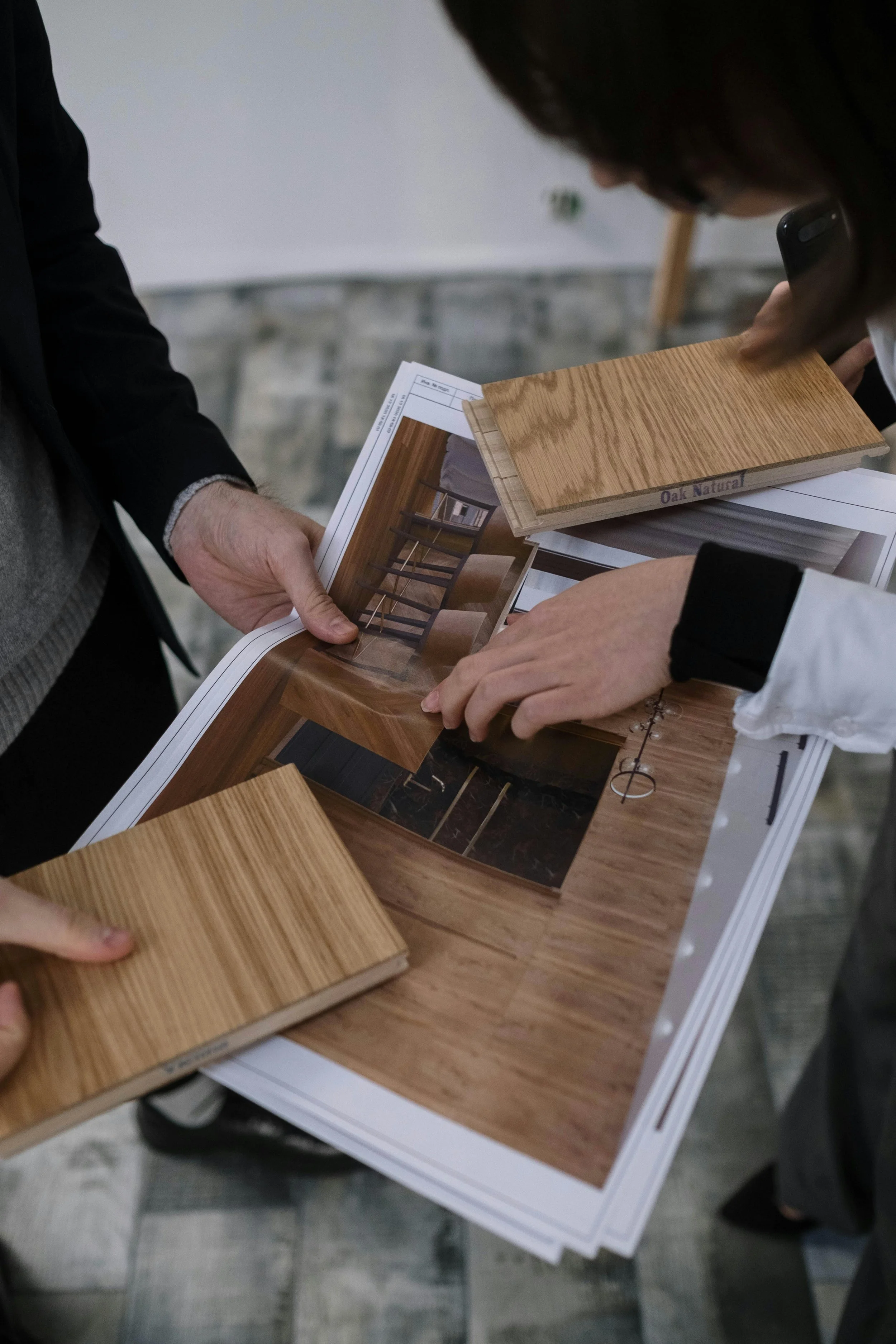
I’ve worked in flooring businesses where the conversion rate from sample order to sale sat at around 30%. I’ve also worked in others where it struggled to reach 8%. The difference wasn’t product quality, pricing or traffic levels. It came down to follow-up.
The higher-performing businesses treated sample orders as leads with intent. They followed up quickly, acknowledged when the sample should’ve arrived, and helped customers work out what to do next. The lower-performing businesses waited and hoped.
A 30% conversion rate doesn’t happen by chance. It comes from recognising that a sample order is often the strongest signal you’ll see across the entire customer journey. Stronger than a newsletter signup. Stronger than most product page views. Often stronger than an abandoned basket.
If you’re not supporting customers once they’ve ordered samples, you’re asking them to do all the work themselves. Some will. Many won’t. They’ll get distracted, uncertain, or overwhelmed, and they’ll drift away.
Optimising your sample service doesn’t mean applying pressure. It means being present while customers are actively trying to make a decision. A simple check-in once the sample has arrived. Help with quantities. Reassurance around suitability. Clear guidance on next steps.
When flooring retailers ask how to improve conversion rates, this is usually where the biggest gains are hiding.
Using automation properly, not lazily
Platforms like ActiveCampaign exist for a reason, yet many flooring retailers barely scratch the surface of what they’re capable of. Email tools often end up being used to push offers, rather than support decision-making.
If someone orders a sample, you already know which product they’re interested in and roughly when it should arrive. That information should drive relevant follow-up, not generic campaigns.
The aim of automation in flooring ecommerce isn’t to chase people. It’s to reduce uncertainty and remove friction. A confirmation message that sets expectations. A follow-up timed to when the sample lands. Guidance on measuring, pack coverage, underlay compatibility, or whether additional samples might help.
This works across Shopify, Magento and WooCommerce. The platform itself is rarely the constraint. The real issue is whether the site is properly connected to customer behaviour. When automation responds to real signals, email stops feeling like marketing and starts feeling like help.
Customers want reassurance, not just specifications
Flooring products carry complexity. Thickness, wear layers, finishes, underlay compatibility and installation methods all affect suitability. Customers don’t expect to understand everything, but they do expect enough clarity to feel confident they’re making a sensible choice.
Too many ecommerce flooring sites rely heavily on manufacturer descriptions and specification tables. They’re accurate, but they rarely answer the questions customers are actually asking. Will this work with underfloor heating. Is it suitable for pets. How forgiving is it if the subfloor isn’t perfect. Will it show wear in busy areas.
When those questions aren’t addressed clearly, hesitation creeps in. Customers order samples, sit on them, and then stall.
Retailers who perform well online bring guidance forward. They explain where a product works well and where it doesn’t. They acknowledge compromises and help customers rule options out as much as they help them choose.
That honesty builds trust. It also reduces returns, cancellations and post-purchase frustration, which are costly problems in flooring ecommerce.
Traffic volume doesn’t equal buying intent
One of the most common questions ecommerce flooring businesses ask is how to increase traffic. Often, that isn’t the real issue.
Many sites already attract a reasonable number of visitors. The problem is that everyone is treated the same. Someone browsing inspiration content is handled exactly like someone who’s ordered multiple samples and returned to the same product page several times.
That flattens the journey.
Buying intent should shape how you communicate. Sample orders, repeat visits, time spent on key pages and engagement with buying guides all point to readiness. If your paid media, email follow-up and on-site messaging don’t reflect that, you’re missing opportunities to guide customers towards a decision.
Mobile behaviour matters here too. Flooring research, browsing and purchasing often happen across multiple sessions and devices. If your sample ordering process, product pages or checkout experience are clumsy on a phone, hesitation increases and intent leaks away.
Discounts can’t solve uncertainty
Flooring retailers lean heavily on promotions. Sales banners and limited-time offers feel familiar and easy to deploy. Sometimes they help. Often they’re masking deeper issues.
Discounts don’t answer questions. They don’t reduce doubt about suitability or finish. They simply lower the perceived risk enough for some people to take a chance.
That approach is blunt and expensive.
Research from Baymard shows that around 70% of online baskets are abandoned before checkout. Even when customers have shown clear intent, most still hesitate. That drop-off isn’t driven by price alone. Uncertainty, friction and second-guessing play a major role.
If the response to that hesitation is always another discount, margins erode without addressing the real problem.
eCommerce needs to be treated like a sales channel

The final issue is mindset.
Some flooring businesses still see ecommerce as something that runs quietly in the background. Products are listed, ads are switched on, and customer service steps in when there’s a problem.
The strongest performers treat ecommerce like a sales operation. Timing matters. Follow-up matters. Context matters.
When someone orders samples, asks a question, or repeatedly returns to the same product, that’s the digital equivalent of a customer standing in a showroom asking for advice. If the response is slow, generic, or missing altogether, the opportunity fades.
Final thoughts…
If you sell flooring online, your biggest growth opportunity probably isn’t more ads or more products. It’s making better use of the signals customers already give you.
A sample order is a lead with intent. Support the decision properly and results follow. Ignore it, and you’re relying on luck.
In eCommerce, luck is a poor strategy.
Get In Touch
If you run an eCommerce business in the home improvements space and recognise some of these challenges, it’s usually a sign that small, practical changes could make a meaningful difference.
At Agilita Digital, we work with eCommerce retailers to tighten up strategy, improve follow-up, and make better use of the intent customers already show. That might be around sample journeys, email automation, paid media, or simply stepping back and working out where effort and budget are best spent.
If you’d like a conversation about what’s holding your eCommerce performance back, you’re welcome to get in touch.
