
AI Can Do Your Marketing. But Does It Understand Your Business?
Artificial intelligence has become almost impossible to ignore in marketing. Everywhere you look, businesses are being encouraged to embrace AI, automate their processes and take advantage of technology that promises to save time, reduce costs and make marketing more accessible than ever before.
For small businesses in particular, the appeal is obvious. Why spend hours writing social media posts, developing marketing materials or analysing spreadsheets when a tool like ChatGPT, Claude or Gemini can seemingly do the same job in a matter of seconds? When you're running a business and juggling countless responsibilities, anything that promises to make life easier is understandably attractive.
And to be fair, some of the technology available today is genuinely impressive. AI can process enormous amounts of information, identify patterns in data, help generate ideas and take care of repetitive tasks that would otherwise consume valuable time. Used properly, it can be an incredibly useful addition to a business.
However, we're increasingly seeing examples of businesses placing an extraordinary amount of faith in what these tools produce, often with very little scrutiny of the finished product or the recommendations being made.
It's becoming remarkably easy to generate something that looks like marketing, publish it and move on to the next task. But how much consideration is being given to whether that content actually represents the business, appeals to its customers or supports what the business is trying to achieve?
And perhaps more importantly, does the technology producing it have any real understanding of the business behind it?
When The Finished Product Gives the Game Away

One of the more noticeable consequences of AI becoming so accessible is the sheer volume of AI-generated marketing material appearing online. Social media feeds are increasingly filled with promotional graphics, posters and advertisements that have clearly been produced using tools like ChatGPT, often with some fairly questionable results.
You've probably seen them yourself. Businesses advertising events with bizarre illustrations, strange proportions, questionable typography and imagery that bears little resemblance to the products and services they're supposedly promoting. Some of it is genuinely laughable, yet businesses are happily publishing it under their own names.
There's also a particular style of promotional artwork becoming increasingly common, especially among smaller businesses advertising local events, entertainment and special offers. Huge lettering, dramatic lighting, exaggerated colours, endless visual effects and seemingly every available space filled with another graphic element. The finished product might look impressive at first glance, but take a closer look and you'll often find that the actual message has become almost impossible to decipher.
Everything is fighting for attention. The headline, the imagery, the background, the decorative elements and the supporting information are all competing with one another. In some cases, you'd be forgiven for struggling to work out what the business is actually advertising.
What's particularly interesting is how similar so much of this material looks. Different businesses promoting completely different things, yet remarkably similar visual treatments appear again and again. When businesses are trying to establish their own identity and stand out from competitors, surely that's worth questioning?
We've seen people defend this sort of content with arguments along the lines of, "Small business owners don't have the time or money to spend on professional marketing. At least they're doing something."
Frankly, we think that's completely the wrong attitude to have.
Of course, small business owners have limited time and resources. We work with them every day, and we understand the pressures they're under. But since when did simply doing something become a measure of whether it's worth doing? If the finished product looks almost identical to the AI-generated poster published by the business down the road, what exactly has been achieved?
We'd argue that doing nothing is sometimes preferable to publishing something that looks dreadful, communicates very little and potentially damages the perception of your business. Your marketing represents your brand, and customers will form opinions about your business based on what you put in front of them. Being short of time doesn't suddenly make quality irrelevant.
And here's something else to consider. Many of these businesses would probably have questioned the quality of the same material had it been supplied by a professional designer or marketing agency. Yet because it has been generated in seconds, seemingly for free, the standards they're prepared to accept appear to have changed.
The absence of genuine creative judgement is a much more substantial issue than the technical limitations of AI, and it's one that will remain relevant even as the technology improves.
Good graphic design involves understanding the audience, establishing a clear visual hierarchy and making deliberate decisions about what information deserves attention. There's a reason designers spend time considering typography, spacing, composition and brand consistency. Producing an elaborate image is relatively straightforward with today's technology, but that doesn't automatically mean those decisions have been made.
The problem extends well beyond graphics. AI-generated social media posts, website copy and blogs are becoming increasingly recognisable too. There's often a particular style to the writing, with generic enthusiasm, repetitive phrases and an abundance of marketing clichés that could just as easily apply to a plumbing company in Yorkshire as a restaurant in Cornwall.
Of course, there's nothing inherently wrong with using AI to help produce marketing content. It can be extremely useful for developing ideas, overcoming writer's block or producing an initial draft. But somebody still needs to understand the business well enough to recognise when the output is inaccurate, inappropriate or simply lacking the personality that makes the business distinctive.
We've always encouraged businesses to think carefully about how they present themselves, particularly when they're competing against larger organisations with considerably greater marketing budgets. Their knowledge, experience, personality and understanding of their customers can be genuine competitive advantages.
Handing over the responsibility for communicating those qualities to a tool that knows very little about the business risks losing much of what makes it worth choosing in the first place.
AI Can Analyse Data, But Does It Understand What Happened?
One area where AI has enormous potential is data analysis. Marketing platforms generate vast amounts of information, and making sense of it all can be incredibly time-consuming, particularly for smaller businesses without dedicated marketing teams or analysts.
Being able to upload a spreadsheet, ask questions about performance and identify trends in seconds is genuinely useful. AI can help highlight changes in customer behaviour, identify underperforming campaigns, compare results across different periods and uncover patterns that might otherwise have been overlooked. We've found it particularly useful when working with large datasets where manually examining every individual figure would take hours.
However, there's a fairly significant limitation that businesses need to understand. AI can interpret the numbers you give it, but it doesn't necessarily understand the circumstances that produced them.
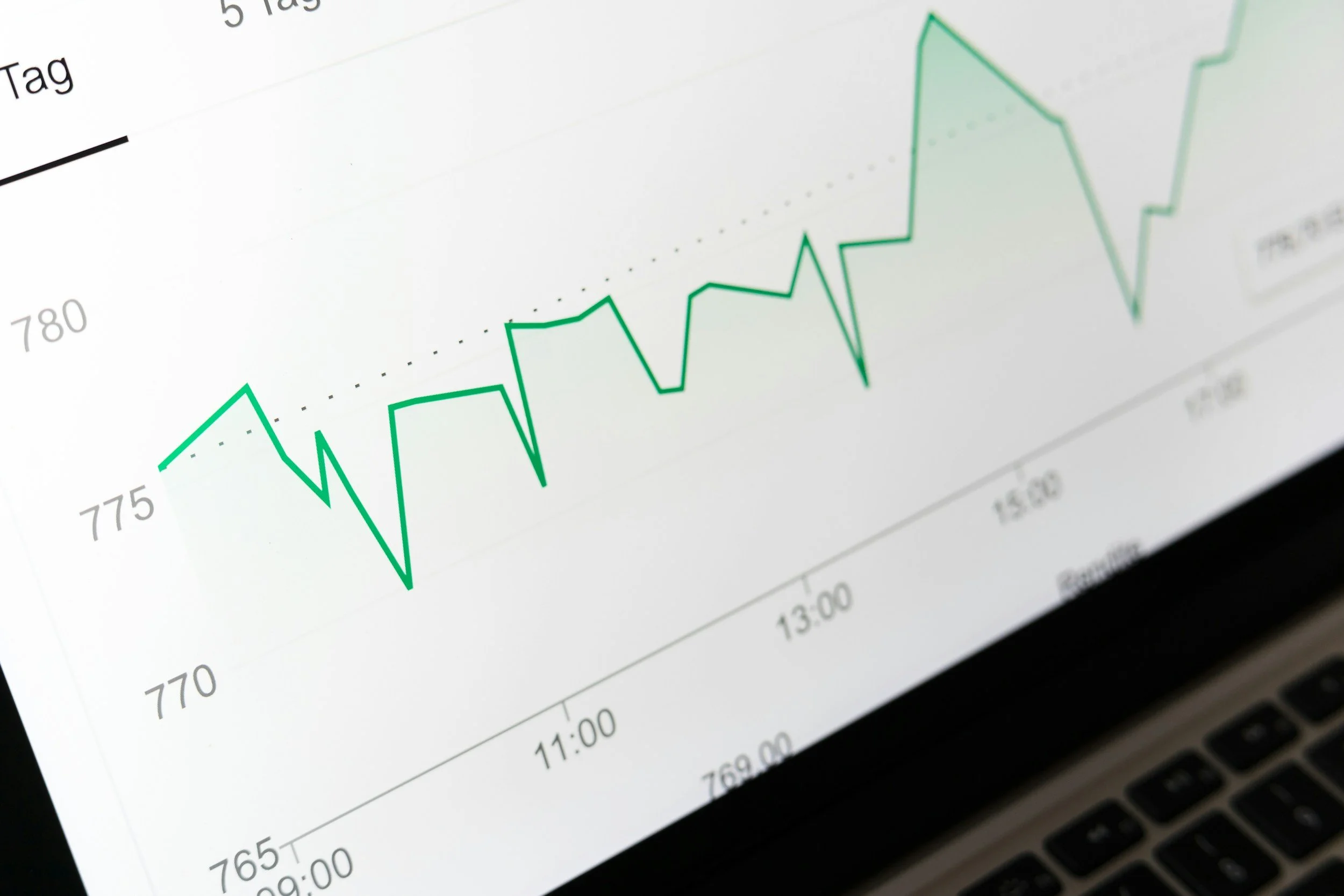
Take a business that's experienced a 30% decline in website enquiries over the past three months. Feed that information into an AI tool and it might quite reasonably flag the decline as a concern, identify which marketing channels have contributed to it and suggest ways to recover the lost enquiries.
But what if the business deliberately reduced its advertising expenditure because it was already operating at capacity? What if it had recently secured a major contract and decided to focus on servicing existing customers? Perhaps the business had increased its prices, resulting in fewer enquiries but considerably more profitable work.
Suddenly, that 30% decline doesn't look quite so concerning.
The same applies when performance improves. An AI-generated report might celebrate a significant increase in revenue and attribute it to improvements in marketing activity. However, somebody familiar with the business might know that a major competitor recently closed, a particularly large order was placed by an existing customer or a temporary promotion encouraged people to purchase earlier than they otherwise would have.
None of those circumstances necessarily invalidates the data, but they can fundamentally change what conclusions should be drawn from it.
There's also the question of what businesses choose to measure in the first place. AI can identify that a particular advertising campaign generated the most conversions at the lowest cost, but without understanding the value of those customers, their likelihood of purchasing again or the profit margins associated with different products and services, recommending that more budget should be allocated to that campaign could be a very expensive mistake.
This is where experience, commercial understanding and conversations with the people running the business become so important. A marketing report might show that performance has improved or deteriorated, but the reasons behind those changes aren't always visible in Google Analytics, an advertising dashboard or a spreadsheet.
And we'd encourage businesses to be particularly cautious about accepting AI-generated recommendations simply because they're presented confidently. These tools can produce remarkably convincing explanations, even when they're working with incomplete information or making assumptions that haven't been verified.
We use AI to help analyse marketing performance, and there's no question that it can make the process considerably more efficient. But the findings still need to be questioned, checked against what we know about the business and considered alongside the commercial objectives we're working towards.
After all, understanding what happened is only part of the job. Understanding why it happened is what allows you to make better decisions about what to do next.
The Danger Of Outsourcing Your Thinking
Perhaps one of the more concerning developments is the growing willingness of businesses to let AI make decisions on their behalf. We're seeing people turn to tools like ChatGPT for everything from developing marketing strategies and identifying target audiences to deciding how much they should spend on advertising and which services they ought to promote.
And you can understand the attraction. For a small business owner who doesn't have a marketing background, being able to describe their business and receive what appears to be a comprehensive marketing strategy within seconds must feel like an enormous advantage. Particularly when the alternative might involve paying a consultant or agency for advice.
The trouble is that AI is only working with the information it's been given, alongside whatever assumptions it makes to fill in the gaps. It might know what typically works for businesses operating in a particular industry, but that doesn't mean it understands the circumstances facing your business.
Consider a business asking AI to recommend a marketing strategy for the next twelve months. It might receive a perfectly reasonable-looking plan involving SEO, Google Ads, social media, email marketing and content creation, complete with suggested budgets and performance targets. On the surface, everything appears comprehensive and professionally presented.
But how much does that recommendation account for the business's actual financial position, its capacity to fulfil additional orders, the profitability of different services or the challenges it's experienced with previous marketing activity? Does it understand the personalities involved, the relationships the business has built with its customers or the reasons certain approaches have failed in the past?
Unless that information has been provided, and provided accurately, there's every possibility the recommendations are being built around assumptions that simply don't reflect reality.
There's another issue here too, and it's one we think deserves more attention. AI has a remarkable ability to make questionable advice sound incredibly convincing. A detailed response, neatly structured with recommendations, forecasts and suggested next steps, can create an impression of authority that isn't necessarily justified by the information behind it.
For somebody without the experience to challenge those recommendations, distinguishing genuinely useful advice from something that merely sounds plausible can be difficult.
This is particularly relevant when businesses start using AI to validate decisions they've already made. Ask a question in a way that suggests a preferred outcome and there's a risk of receiving a response that reinforces that thinking, especially when important context or alternative perspectives have been left out.
We've always believed that good marketing consultancy involves challenging assumptions, asking uncomfortable questions and occasionally telling a business owner something they probably don't want to hear. Those conversations are often where the most valuable insights emerge, because they force everyone involved to consider whether the proposed activity genuinely makes commercial sense.
AI can certainly contribute to that process, particularly when it's used to explore different scenarios or test ideas. But businesses still need somebody who understands their circumstances, recognises the limitations of the information available and is prepared to question the conclusions being presented.
Ultimately, if you're relying on AI to tell you what your business should be doing, you need to be confident that you understand your business well enough to recognise when its advice might be wrong.
Use AI, But Don't Lose Sight of What Matters
For all the concerns we've raised, we'd be the first to acknowledge that AI has become an incredibly useful tool for businesses, including our own. The ability to analyse information, explore ideas, automate repetitive tasks and speed up certain processes has genuine value, particularly when time and resources are limited.
And we're certainly not suggesting that every small business needs to employ a graphic designer, copywriter or marketing consultant before it can publish anything. That would be completely unrealistic, and it would ignore one of the biggest advantages AI has brought to smaller organisations: access to capabilities that might previously have been beyond their budgets.
However, there's a difference between using technology to help you do something better and allowing it to dictate what you do in the first place.
We've seen how easily AI can produce marketing materials that lack originality, analyse data without appreciating the circumstances behind it and recommend strategies based on assumptions that don't necessarily reflect the business. None of those limitations makes the technology inherently unsuitable for marketing, but they do demonstrate why somebody still needs to take responsibility for the decisions being made.
If you're using AI to create content, take the time to question whether it genuinely represents your business. If you're using it to analyse performance, consider what the numbers might be missing. And if you're asking it to recommend a marketing strategy, make sure you're providing enough information to receive meaningful advice, while retaining the confidence to challenge its conclusions.
It's also worth remembering that customers aren't particularly interested in how quickly or cheaply your marketing was produced. They're interested in whether your business understands their needs, communicates clearly and gives them a compelling reason to choose you. Saving an hour producing a promotional graphic is of questionable value if the finished product makes your business look unprofessional.
As AI continues to improve, the technical barriers to producing marketing will undoubtedly become smaller. More businesses will have access to sophisticated tools, and the quality of what those tools can generate will continue to develop. But that makes the ability to exercise good judgement, understand customers and make informed commercial decisions all the more important.
We'd encourage business owners to embrace the opportunities AI presents, while being a little more critical of the results. Question what it produces, understand where its recommendations come from and don't be afraid to reject something simply because it doesn't feel right for your business.
AI can do an extraordinary amount of work for your business. Whether that work is actually worth doing still requires somebody who understands the business itself.
